


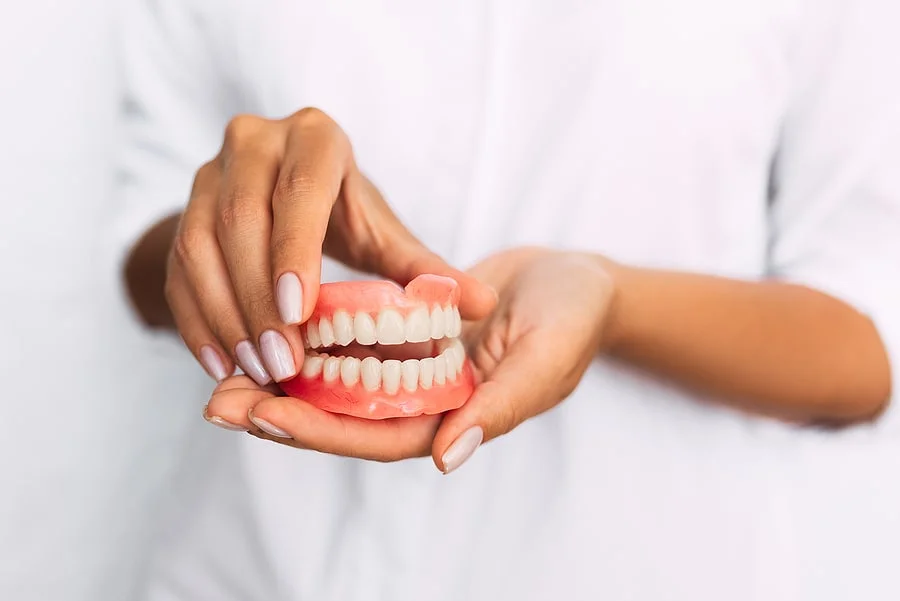
Permanent dentures can feel slimmer than an immediate set, but they are not automatically thinner. Thickness depends on the material, design, bite, and support your mouth needs. A denture made after healing can be fitted to your current gum shape, while an immediate denture often needs adjustments as the gums change. Here, “permanent” means a definitive long-term denture; it does not necessarily mean a fixed, implant-supported appliance.
If you’re comparing your options for dentures in Rockville, MD, understanding the thickness difference helps set your expectations for comfort, speech, and the timeline from your first set to your final one. This guide explains why the two differ, what to expect at each stage, and how to get a fit that actually feels good.
Key takeaways
- A definitive denture may feel less bulky, but thickness varies by design and material.
- Immediate dentures often need adjustments as the gums change during healing.
- Definitive dentures are fitted to your healed tissues; comfort depends on the final design and fit.
- Most people wear temporary dentures for a matter of months while their gums settle.
- Implant-supported designs offer different forms of support; suitability depends on an individual assessment.
- Fit matters more than thickness alone. A loose denture causes sore spots no matter how thin it is.
Why Can Temporary Dentures Feel Bulky?
Temporary dentures are also called immediate dentures. You get them the same day your teeth are removed, so you never have to walk around with an empty smile while you heal.
Your gums and jawbone change shape after extractions. That healing can change the fit of an immediate denture and create a need for adjustments or relining. It does not mean every immediate denture is deliberately thicker. Your dentist balances fit, strength, and support when choosing the design.
The American Dental Association explains that immediate dentures are made using measurements taken before extraction and may need relining or remaking after healing. They are custom-made, but the dentist must account for the changes that follow tooth removal.
What Changes When You Get Your Definitive Dentures?
Permanent dentures are made after your gums have fully healed. By then your gum shape is stable, so your dentist takes fresh molds and the lab crafts a denture that matches that settled shape exactly.
A definitive denture is designed around the healed tissues and your bite. Depending on the material and design, the potential benefits include:
- A base tailored to your mouth
- Less bulk against your cheeks and tongue
- Clearer speech, since your tongue has more room to move
- A more natural look and feel overall
Temporary vs. Permanent Dentures: Quick Comparison
| Feature | Temporary (immediate) dentures | Permanent dentures |
|---|---|---|
| Thickness | Varies by material and design | Varies; not necessarily thinner |
| When you get them | The same day teeth are removed | After gums heal (a matter of months) |
| Fit | May need adjustments during healing | Fitted to healed tissues; periodic adjustments may still be needed |
| Speech and comfort | Takes more getting used to | Depends on fit, design, and adjustment |
| How long they last | Months (a healing-stage tool) | About 7 to 10 years with good care |
| Role in your plan | Part of the transition | Your long-term set |
Per Cleveland Clinic, dentures generally last around seven to 10 years before they need replacing, since your mouth keeps changing slowly over time.
How Do You Go From Temporary to Permanent Dentures?
Here’s the path most patients follow:
- Exam and plan. Your dentist checks your teeth, gums, and jawbone, then maps out your denture plan and timeline.
- Tooth removal with immediate dentures. Any failing teeth are removed, and your temporary denture goes in the same day.
- Healing period. Your gums heal and reshape over the next several months. You come in for relines so the fit stays snug as things change.
- New molds. Once healing is done, your dentist takes fresh impressions of your healed gums.
- Fitting your permanent dentures. The lab makes your custom set, and your dentist fine-tunes the fit and bite until it feels right.
At our Rockville office, this process is spread across easy visits. Patients often mention short wait times and a friendly team, from the front desk to the chair, which helps when you have a few appointments in a row.
How to Adjust to New Dentures
Whether they’re temporary or permanent, new dentures take a short adjustment period. A few tips make it smoother:
- Start with soft foods cut into small pieces, and chew on both sides to keep the denture balanced.
- Practice speaking by reading out loud; tricky sounds usually settle within a couple of weeks.
- Expect a little extra saliva at first. That fades as your mouth gets used to the denture.
- Report sore spots. Don’t tough them out. A quick adjustment fixes most, and that’s easier with a permanent set that’s already molded to your gums.
Is a Thinner Denture Always Better?
No. Fit, strength, and support matter more than thinness alone. Removing too much material can weaken a denture or change how it functions. Ask your dentist to assess a bulky or uncomfortable denture rather than trying to trim it yourself.
Ask whether an implant-retained or implant-supported design fits your needs. Some designs reduce palate coverage, but the amount of material and support varies. Your dentist can explain which removable or fixed options are suitable for your mouth.
Care depends on the type of denture. Removable dentures need daily cleaning and appropriate storage when out of the mouth. Fixed implant-supported dentures require a different cleaning routine and are removed only by a dental professional. Follow the instructions for your appliance.
Frequently Asked Questions
Are permanent dentures thinner than temporary dentures?
They can be, but there is no universal rule. Material, strength requirements, and the design of your denture determine its thickness. A definitive denture is made or adjusted for your mouth after healing.
How long do I wear temporary dentures?
Most people wear them for several months. Your dentist will tell you when your gums have healed enough for a permanent set.
Do permanent dentures feel more comfortable?
They may feel more comfortable when the fit and bite are well adjusted, but a definitive denture is not always lighter or less bulky. Comfort depends on the design, your mouth, and the adjustment period.
Can my temporary dentures become my permanent ones?
Sometimes an immediate denture can be relined or adjusted for long-term use; other cases need a new definitive denture. Your dentist will assess the condition and fit.
How long do permanent dentures last?
About seven to 10 years with good care, per Cleveland Clinic. Your mouth slowly changes over time, so dentures need periodic adjustments or replacement.
Are implant dentures thinner than regular dentures?
Some implant-supported designs can reduce bulk or palate coverage. Others still require substantial material for strength and support. Your dentist can compare the designs suitable for you.
Why do my temporary dentures feel loose already?
Your gums can change shape during healing and loosen the fit. Contact your dentist for an assessment; an adjustment or reline may be needed. Do not adjust the denture yourself.
Do thinner dentures break more easily?
Thickness, material, bite forces, and design all affect strength. A thinner denture is not necessarily better or more durable. Do not modify a denture yourself.
Will thinner dentures improve my speech?
They can. A slimmer base gives your tongue more room, which often makes certain sounds clearer once you’ve adjusted.
How do I know when it’s time for my permanent dentures?
Your dentist checks that your gums have healed and stabilized. When the reshaping has largely stopped, it’s time for fresh molds and your custom permanent set.
Ready for Dentures That Fit Right?
If your dentures feel bulky, loose, or just not quite right, we can help. Meet our doctors at Crown Dental Care in Rockville, MD, and let Dr. T and the team build a set that fits your smile and your life.
Call us at (301) 450-8409 (new patients) or (301) 591-3888 (current patients), or request an appointment online. We can’t wait to see your smile.
